
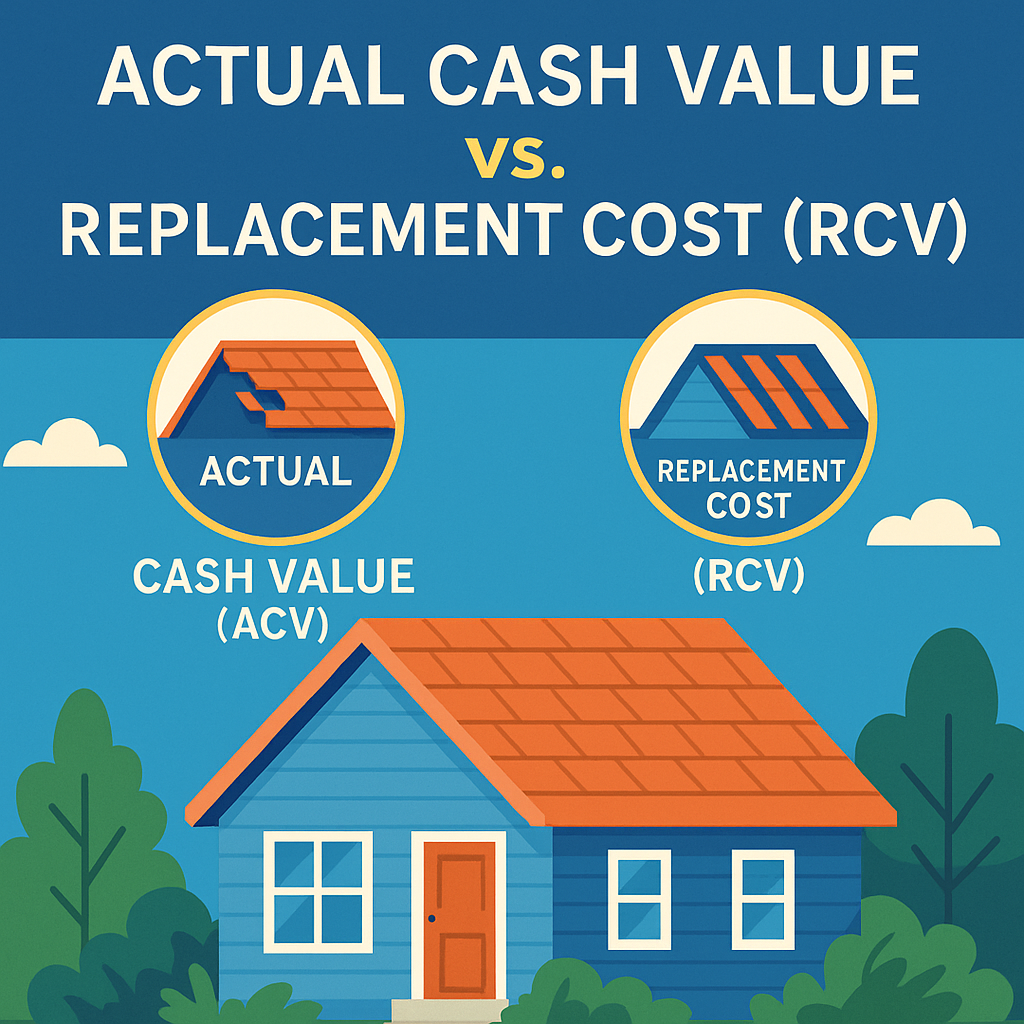
The Homeowner’s Guide to Understanding Actual Cash Value (ACV) vs. Replacement Cost (RCV)
When a storm shreds your shingles or a fallen tree puts a hole in your roof, your homeowner’s insurance policy becomes your safety net. But not all policies provide the same level of protection. Two common terms-Actual Cash Value (ACV) and Replacement Cost Value (RCV)-describe how insurance companies calculate what they will pay. Understanding the difference can mean the difference between a small repair bill and a major out‑of‑pocket expense. This guide breaks down these concepts in plain language, explains how payouts work, and shows what they mean for roof repairs.
What Is Actual Cash Value (ACV)?
Actual Cash Value is an insurance term that refers to the depreciated value of your property. When you make a claim for a damaged roof or personal belongings, an ACV policy pays you what the item is worth today rather than what it costs to buy new. According to the North Carolina Department of Insurance, ACV is “the amount of money needed to fix your home, minus the decrease in value of your property because of age or use”. In other words, the older and more worn out your roof is, the less money you receive.
Insurance companies calculate ACV by starting with the cost of replacing an item at today’s prices and subtracting depreciation. Allstate notes that a homeowners policy with ACV coverage typically determines value by taking the cost to replace your belongings and reducing that amount due to depreciation from factors such as age or wear and tear. For example, if a fire damages your TV, a policy with ACV coverage reimburses you for its depreciated value-which may be less than the cost to buy a new one. This approach also applies to parts of your home; an old roof is worth less than a new one, so an ACV claim can leave you covering the difference.
Key Points About ACV
- Depreciation matters: The older the roof or item, the less you receive. Depreciation is based on the condition of the property, what a new item would cost and how long it normally lasts.
- Lower premiums: ACV policies often come with lower monthly premiums, but the payout can be significantly smaller when you file a claim.
- Higher out‑of‑pocket costs: Because the payout is reduced for age and wear, homeowners must cover any difference between the claim payment and the actual replacement cost.
- May apply only to part of your policy: Some insurers offer ACV coverage just for the roof while providing replacement cost coverage for other parts of the home.
What Is Replacement Cost Value (RCV)?
Replacement Cost Value represents the cost to repair or replace your damaged property without deducting for depreciation. A policy with RCV coverage reimburses you enough to repair or rebuild using materials of like kind and quality at today’s prices. The National Association of Insurance Commissioners (NAIC) explains that if you have RCV coverage, your policy pays the cost to repair or replace your property using materials of a like kind and quality. The Texas Department of Insurance illustrates this concept by showing that if it costs $10,000 to replace a roof, a replacement‑cost policy pays that amount minus your deductible, regardless of the roof’s age.
Allstate describes RCV by noting that this type of coverage helps pay to repair or replace damaged property without deducting for depreciation. In the context of personal belongings, replacement cost coverage typically reimburses you enough to buy a new item of similar model and quality if your property is stolen or damaged. Because depreciation isn’t subtracted, RCV claims often result in larger payouts.
Key Points About RCV
- Pays for like‑new replacement: RCV policies cover the cost of replacing your property with materials of similar quality, without considering age.
- Higher premiums: This broader coverage generally costs more in monthly premiums, but you receive more money when you file a claim.
- May require proof of repairs: Some insurers initially pay the ACV amount and then reimburse the difference after you submit receipts showing that repairs or replacement have been completed.
- Often used for dwellings: Most homeowners policies include replacement cost coverage for the structure of your home; you may still need to check whether your roof or personal property is covered at ACV or RCV.
Comparing ACV and RCV Coverage
The following table summarizes the major differences between ACV and RCV coverage. Keep in mind that policies vary by insurer and state, so always read your policy documents and consult your agent.
| Coverage Type | How the Claim Is Paid | Pros | Cons |
|---|---|---|---|
| Actual Cash Value (ACV) | Pays the depreciated value of the roof or item: replacement cost minus wear and tear. | Lower premiums; may be suitable for newer roofs or homeowners willing to assume more risk. | Payout is reduced by age and condition; you may need to pay large out‑of‑pocket expenses. |
| Replacement Cost Value (RCV) | Pays the full replacement cost with materials of like kind and quality at today’s prices. | Covers the entire cost of repairs (minus deductible); better protection for older roofs. | Higher premiums; insurer may require receipts before reimbursing the full amount. |
How Claims Are Paid Under ACV vs. RCV
Understanding how insurers process claims helps you anticipate your out‑of‑pocket costs. Imagine that both the Smith family and the Johnson family have roofs that suffered $15,000 in damage. Both families have a $1,000 deductible. The NAIC explains that under a replacement‑cost (RCV) policy, the Smiths will be reimbursed the full cost of the roof repair ($15,000) minus their deductible, resulting in a $14,000 payment. Under an actual‑cash‑value (ACV) policy, the Johnsons are paid for the current value of the roof repairs minus depreciation and the deductible. If the damaged roof has depreciated by $10,000, the Johnsons receive only $4,000-leaving them to cover the remaining cost themselves.
The Texas Department of Insurance illustrates a similar example. With a $10,000 roof replacement, a replacement‑cost policy pays $10,000 minus the deductible, whereas an ACV policy’s payment depends on the roof’s age. For a five‑year‑old roof with an actual cash value of $8,500, the policy pays $4,500 after a $4,000 deductible; for a ten‑year‑old roof valued at $7,000, the payout is $3,000; and for a twenty‑year‑old roof valued at $4,000, the payment is zero after deducting the $4,000 deductible. These examples show how depreciation can dramatically reduce ACV claim payments.
The Role of Deductibles and Coverage Limits
Regardless of whether you choose ACV or RCV coverage, you must pay a deductible before your insurance kicks in, and your policy may have coverage limits. Allstate notes that you should review your policy to understand what type of coverage it provides and the amount of your deductible and coverage limits. Policies with higher deductibles typically have lower premiums, but you will pay more out of pocket when filing a claim. Coverage limits represent the maximum amount your policy will pay toward a covered loss. If your roof replacement costs more than the limit, you are responsible for the difference.
How ACV vs. RCV Affects Roof Repairs
A roof is one of the most expensive components of your home. Payouts under ACV or RCV coverage can significantly affect your finances when a storm or other peril damages your roof.
Depreciation and Roof Age
Insurance companies often consider the age and condition of the roof when calculating ACV payouts. An older roof may have a lower actual cash value because shingles and underlayment have aged, materials may be out of date, or the roof may not meet current building codes. United Policyholders notes that with ACV coverage, the insurer pays to repair or replace your roof less your deductible and depreciation. This means that if your roof is twenty years old, the payout could be very small or even zero after the deductible. In states prone to wind or hail, insurers sometimes offer ACV coverage for roofs only, while maintaining RCV coverage for the rest of the dwelling.
By contrast, RCV policies pay the full cost to replace your roof using materials of like kind and quality, regardless of age. You still need to pay your deductible, but the insurer covers the remaining amount. Some policies may initially pay the ACV value and reimburse the remaining amount (called recoverable depreciation) after you complete the repairs and provide receipts.
Roof Payment Schedules and Depreciation Tables
Insurers sometimes provide a roof payment schedule showing how much they will pay based on the roof’s age and material. This schedule may specify a percentage of the replacement cost for each year of age. For example, a policy might cover 90 % of replacement cost for roofs under five years old, 70 % for roofs between six and ten years old, and 40 % for roofs older than fifteen years. If your roof has an ACV endorsement, review this schedule to understand your potential payout. Allstate’s House & Home policy, for instance, uses a scheduled roof depreciation option for wind and hail damage on older roofs. Knowing your roof’s age and the insurer’s depreciation formula helps you estimate your claim payment.
Example: Calculating an ACV Claim
Imagine your roof was installed 12 years ago at a cost of $15,000. The insurer determines that shingles have a 20‑year lifespan, so the roof has depreciated by 60 %. If a storm causes $15,000 of damage, the replacement cost is still $15,000. Under ACV coverage, the insurer subtracts 60 % ($9,000) as depreciation. The actual cash value is $6,000. After your $1,000 deductible, you receive $5,000. You must pay the remaining $10,000 yourself. Under RCV coverage, you would receive $14,000 after the deductible.
Pros and Cons of ACV and RCV for Homeowners
Choosing between ACV and RCV involves balancing the cost of insurance premiums against potential out‑of‑pocket expenses after a claim. The following sections outline advantages and disadvantages of each option.
Advantages of ACV Coverage
- Lower Premiums: Insurers often charge less for ACV policies because they expect to pay smaller claims. This can make ACV appealing if you need to keep insurance costs down.
- Coverage for Newer Roofs: If your roof is only a few years old and in excellent condition, the depreciation deduction may be modest. For minor repairs, an ACV payout might come close to the actual replacement cost.
- Flexibility for Risk‑Tolerant Homeowners: Homeowners willing to accept more risk (and cover some costs themselves) may choose ACV coverage to save on premiums.
Disadvantages of ACV Coverage
- Large Out‑of‑Pocket Expenses: As roofs age, depreciation increases. In the Texas example, a twenty‑year‑old roof with ACV coverage resulted in no payment after the deductible.
- Uncertain Claim Payments: ACV calculations depend on the insurer’s depreciation schedule. Without reading the policy, homeowners may not know how much they will receive until after the claim is processed.
- Potential Loan Requirements: Mortgage lenders sometimes require replacement cost coverage for the dwelling. Choosing ACV could put you out of compliance with loan terms if full replacement coverage is required.
Advantages of RCV Coverage
- Full Repair or Replacement: RCV policies pay the cost to rebuild or replace without accounting for depreciation. This protects homeowners from large expenses after major damage.
- Peace of Mind: Knowing that your roof will be repaired to current standards can ease stress during severe weather seasons.
- Fulfills Mortgage Requirements: Replacement cost coverage typically satisfies lender requirements for full coverage on the dwelling.
Disadvantages of RCV Coverage
- Higher Premiums: Because insurers pay more when claims occur, they charge higher premiums for RCV coverage.
- Proof of Repairs: Insurers may pay only the ACV amount initially and reimburse the remaining recoverable depreciation after receipts are submitted[11]. This means homeowners must have the funds to pay contractors up front.
- Limits on Older Homes: Some insurers may require modified replacement cost for very old structures where exact materials are unavailable. This coverage pays to rebuild using modern materials rather than replicating historical ones.
Tips for Choosing the Right Roof Coverage
Selecting ACV or RCV coverage is a personal decision that depends on your home’s age, your budget and your willingness to assume risk. Here are some tips to guide your decision:
- Evaluate Your Roof’s Age and Condition: A newer roof may depreciate less in an ACV calculation. If your roof is older or nearing the end of its lifespan, RCV coverage can prevent steep out‑of‑pocket costs after a claim.
- Review Policy Declarations and Endorsements: Check whether your homeowners policy provides ACV or RCV coverage for the roof. Allstate suggests examining your policy declarations and contacting your provider if you have questions. Policies may also include separate deductibles or exclusions for wind and hail.
- Consider Roof Material and Local Climate: Different roofing materials have different lifespans. Metal roofs often last longer than asphalt shingles. If you live in an area with frequent hail or windstorms, paying more for RCV coverage may save money in the long run.
- Ask About Roof Payment Schedules: Some insurers offer a roof payment schedule detailing how much they will pay depending on the roof’s age. Review this schedule carefully before choosing ACV coverage.
- Discuss Options With Your Agent: Insurance terms can be confusing. The NAIC encourages homeowners to talk to their insurance agent or company to decide which policy is best. Ask specifically about roof coverage, deductibles, exclusions and any available discounts for roof upgrades.
The Claim Process: Step‑by‑Step
When your roof is damaged, follow these steps to ensure a smooth claim process and maximize your payout:
- Document the Damage: As soon as it is safe, take photos and videos of the damage. Gather receipts for any temporary repairs or related expenses.
- Contact Your Insurance Company: Report the damage promptly. Provide details and submit your documentation. Ask whether your policy uses ACV or RCV for roof repairs and whether there is a separate wind or hail deductible.
- Schedule an Adjuster Visit: An insurance adjuster will inspect the damage and estimate repair costs. Be present during the inspection to answer questions and point out all damage.
- Review the Settlement Offer: If your policy is ACV, verify how depreciation was calculated. For RCV policies, confirm whether you will receive the full replacement cost or the ACV amount first with recoverable depreciation paid later.
- Hire a Licensed Contractor: Obtain written estimates and check references. Choose a reputable roofing contractor with experience working with insurance claims. Avoid contractors who demand full payment upfront or offer to waive deductibles.
- Complete the Repairs and Submit Receipts: Keep all invoices and receipts for materials and labor. If your policy includes recoverable depreciation, submit receipts to receive the remaining payment.
- Keep Records: Store all documentation, including correspondence with your insurer and contractor. Having organized records helps if disputes arise later.
Making Your Roof More Resilient
In addition to choosing the right coverage, you can reduce the risk of roof damage and potentially lower premiums by improving your roof’s resilience:
- Perform Regular Maintenance: Inspect your roof at least twice a year and after major storms. Look for missing shingles, damaged flashing and clogged gutters. Prompt repairs extend the roof’s life and may prevent small issues from becoming major claims.
- Upgrade Materials: When replacing your roof, consider impact‑resistant shingles or metal roofing. These materials can better withstand hail and wind. Some insurers offer discounts for impact‑resistant roofs or meeting certain standards, such as the Fortified Home program promoted by the Insurance Institute for Business & Home Safety (IBHS).
- Improve Attachment Methods: Use wind‑resistant hurricane clips or additional nails to create a stronger connection between the roof and the house. This may help your roof stay intact during high winds.
- Trim Trees and Remove Debris: Overhanging branches can break and damage your roof during storms. Keep trees trimmed and remove debris from the roof and gutters.
- Check for Coverage Exclusions: Some policies exclude wind and hail coverage or require separate endorsements. If you live in a high‑risk area, consider buying a separate policy or endorsement to cover those perils.
Conclusion
Understanding the difference between Actual Cash Value and Replacement Cost Value is critical for homeowners, especially when it comes to expensive components like the roof. ACV coverage pays only the depreciated value of your roof or belongings, resulting in lower premiums but potentially high out‑of‑pocket costs. RCV coverage pays the full cost to repair or replace your property with materials of like kind and quality, which generally means higher premiums but greater financial protection. The examples from the NAIC and Texas Department of Insurance highlight how dramatically payouts can differ under each type of coverage.
When choosing between ACV and RCV for your roof, consider the roof’s age, your budget and your tolerance for risk. Read your policy documents carefully, ask your insurance agent questions and review any roof payment schedules or endorsements. If possible, upgrade your roof with resilient materials and attachment methods to reduce damage and possibly qualify for insurance discounts. By understanding these concepts and preparing ahead of time, you can make informed decisions that protect your home and your finances.
Call Orange Contracting and Roofing at 407-205-2676 or email [email protected]
The company’s office is located at 105 Candace Dr., Suite 129, Maitland, FL 32751.