
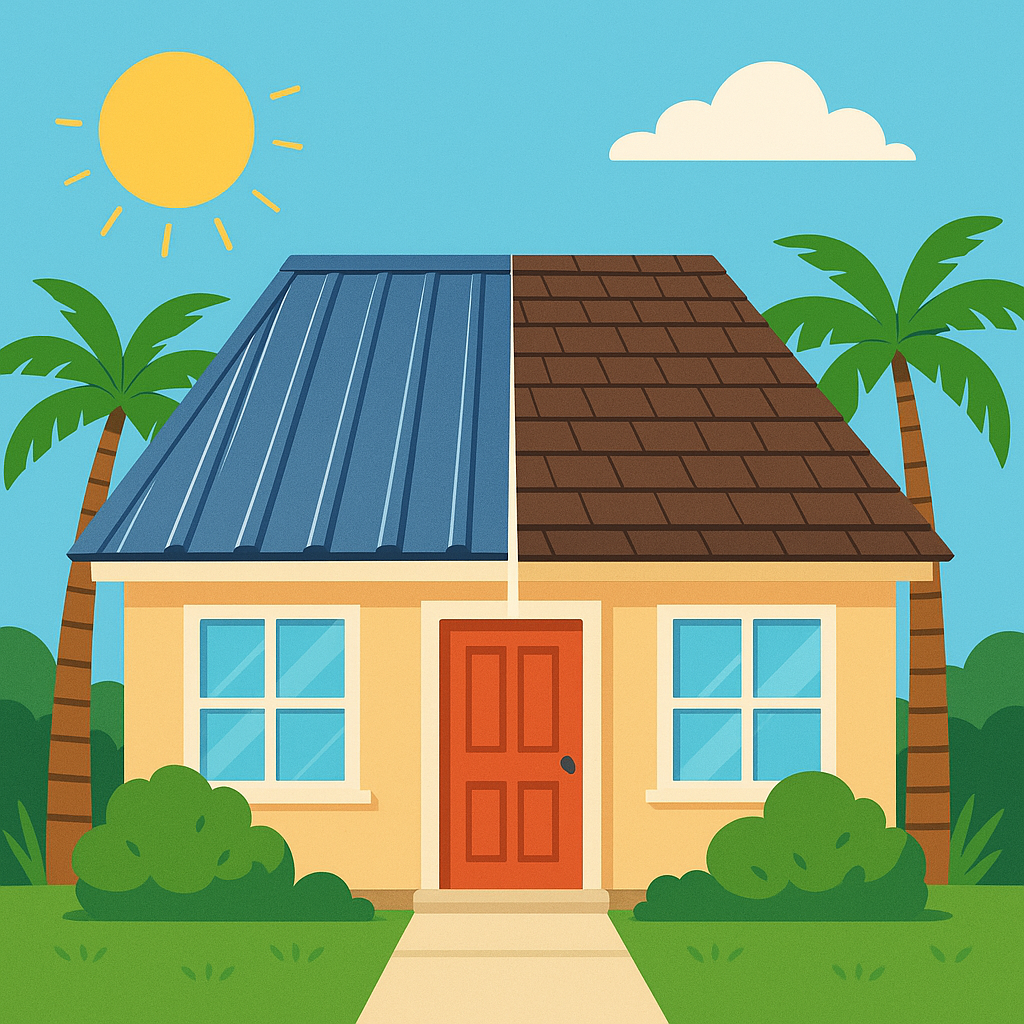
Choosing the right roof for your Florida home isn’t just about looks - it’s about safety, comfort, and cost. Florida’s climate throws a lot at a house: scorching sunshine, drenching rain, salty air, and hurricane‑force winds. Your roof is your home’s first shield against these conditions. A poor choice can lead to higher energy bills, frequent repairs, and even insurance problems, while a wise choice can provide decades of worry‑free protection. This guide compares two of the most common roofing options - metal roofs and shingle roofs - and explains how their long‑term costs stack up in Florida’s unique environment.
Why Florida’s Climate Matters
Florida is famous for its beaches and sunshine, but those same qualities pose challenges for roofs. The combination of intense sun, high humidity, salty coastal air, and powerful storms accelerates wear on roofing materials. Heat causes asphalt shingles to dry out and curl, while metal expands and contracts if not installed correctly. Humidity and salt can corrode unprotected metals and strip granules from shingles. Heavy rain and hurricanes demand a roof that sheds water quickly and resists uplift. Mold, mildew, and algae also thrive in the moist environment, staining shingles and shortening their life. Understanding these climate pressures helps explain why metal and shingle roofs behave differently in the Sunshine State.
Shingle Roofs: The Familiar Choice
Asphalt shingles are the most popular roofing material in the United States. They consist of a fiberglass or felt mat coated in asphalt and topped with ceramic granules. Shingles come in many styles, from simple three‑tab designs to thicker architectural varieties. Homeowners like them because they are inexpensive and easy to install.
Upfront Costs
For a typical 2,000 square‑foot Florida home, asphalt shingles are one of the most budget‑friendly roofing materials. Basic three‑tab shingles are on the lower end of the price spectrum, while architectural and designer shingles cost more due to their heavier construction and enhanced wind resistance. Because shingles are lightweight and easy to install, they rarely require additional structural support, which keeps labor costs down.
Lifespan and Durability
Manufacturers often advertise asphalt shingles as lasting 15 to 30 years, but Florida’s heat and humidity can shorten that to 12-18 years. Intense sunlight causes shingles to dry out and lose their flexibility. Strong winds can lift the edges and blow them off, and granules shed over time, exposing the asphalt layer and leading to leaks. Although repairs are typically simple and inexpensive because you can replace individual shingles, they may be needed frequently. Homeowners should plan for periodic patching, cleaning algae or mold, and eventual replacement every decade or two.
Pros of Shingle Roofs
Pros:
- Affordable and widely available: Shingles are among the least expensive roofing materials and are easy to find in many colors and styles.
- Quick to install and repair: Roofers can lay shingles quickly, and damaged sections are easy to replace.
Cons of Shingle Roofs
Cons:
- Shorter lifespan and storm vulnerability: Even high‑quality shingles may need replacement within two decades, and strong winds can lift or tear them.
- Heat absorption: Dark shingles absorb heat and increase cooling costs.
- Frequent upkeep and waste: Shingles need regular cleaning and inspections, and they are petroleum‑based, which makes recycling difficult.
Metal Roofs: The Durable Contender
Metal roofing used to be limited to barns and industrial buildings, but modern designs make it appealing for homes. Common materials include steel, aluminum, zinc, and copper. Panels can be exposed‑fastener or hidden fastener (standing seam), and some metal shingles mimic tile or slate. In coastal Florida, aluminum and coated steel are popular because they resist corrosion.
Upfront Costs
Metal roofs cost more to install than asphalt shingles. For a 2,000 square‑foot home, metal roofing can be several times more expensive than a basic shingle roof. Standing seam panels and premium metals like copper are on the higher end of this spectrum. The higher cost stems from the materials themselves and the skilled labor required for proper installation. Because panels must be secured correctly to withstand high winds, hiring an experienced metal roofing contractor is essential.
Lifespan and Durability
A properly installed metal roof can last 40 to 70 years or more, even in Florida’s harsh conditions. Many manufacturers offer warranties of 30 to 50 years. Metal resists cracking, shrinking, and eroding, and panels are rated to withstand hurricane‑force winds. Protective coatings guard against rust, especially important near the coast. Unlike shingles, metal panels do not lose their protective layer over time, so they maintain their integrity for decades.
Energy Efficiency
Metal roofs reflect sunlight rather than absorbing it. This reflective quality can reduce cooling costs noticeably, a major benefit in a state where air conditioners run much of the year. Some systems create an air gap between the metal and roof deck that adds insulation and further reduces heat transfer. Lighter colors and specialized “cool roof” coatings enhance this effect. Metal roofs also pair well with solar panels because they provide a strong, long‑lasting base that will likely outlast the solar installation.
Maintenance and Repairs
While metal roofs require less maintenance than shingles, they still need occasional attention. Homeowners should inspect fasteners, flashing, and sealants every few years and clear debris to prevent scratches or rust. Repairs are rare but may require specialized materials and trained labor.
Pros of Metal Roofs
Pros:
- Long lifespan and hurricane resistance: Metal roofs can protect your home for several decades and are designed to handle extreme winds.
- Energy efficient and low maintenance: Reflective surfaces reduce heat gain, and metal resists mold and algae growth.
- Sustainable and potentially discounted: Many metal roofs contain recycled material, are fully recyclable, and may qualify for insurance breaks.
Cons of Metal Roofs
Cons:
- Higher initial cost: Metal roofs are more expensive up front than shingles.
- Noise and movement: Rain can sound louder on metal, and metals expand and contract with temperature changes.
- Appearance and denting: Some homeowners prefer the traditional look of shingles, and softer metals can dent if hit by hail or branches.
Comparing Costs Over Time
A roof’s true cost involves more than just the initial installation. Maintenance, energy bills, insurance, and the number of replacements required all contribute to the total price you pay over decades. The table below summarizes key cost factors for a typical 2,000 square‑foot Florida home:
| Roof Type | Upfront Cost Category | Expected Lifespan | Typical Replacement Cycles (60 years) | Maintenance & Energy Factors |
|---|---|---|---|---|
| Shingle Roof | Low to moderate | 12-18 years in Florida | 3-4 replacements | Requires regular inspections and cleaning; absorbs heat, raising cooling costs; lower wind resistance can mean more storm repairs |
| Metal Roof | Moderate to high | 40-70+ years | May last entire 60‑year period (0-1 replacement) | Minimal maintenance; reflects heat, reducing cooling costs; high wind resistance reduces storm damage; may qualify for insurance discounts |
Total Ownership Cost Example
Imagine you plan to stay in your home for 60 years. Choosing a mid‑range asphalt shingle roof means paying less initially, but you must plan for several replacements over the decades. Because shingles last around 12-18 years in Florida, you may need to reroof three or four times within a 60‑year span. Each replacement brings costs for materials and labor, plus possible increases in disposal fees and permitting expenses. Factor in higher cooling bills due to heat absorption and periodic repairs after storms, and the cumulative cost of shingles can add up significantly.
Now consider a metal roof with a higher initial investment. A metal roof could last 40 to 70 years, possibly requiring no replacement during your 60‑year timeframe. Energy savings may lower your cooling bills, and you would likely avoid the cost and disruption of multiple roof replacements. Over the long term, the metal roof often ends up more economical - especially in Florida’s demanding climate - because the higher upfront expense is offset by fewer replacements and lower energy consumption.
Insurance, Incentives, and Building Codes
Florida’s building codes require roofs to withstand high wind speeds. Metal roofs often meet or exceed these hurricane standards, and some insurance companies offer discounts because of their storm performance. State programs like My Safe Florida Home may provide grants or incentives for hurricane‑resistant features. Metal roofs often qualify, and there may also be federal or state tax credits for energy‑efficient roofs.
Aesthetics and Resale Value
The look of your roof affects curb appeal and resale value. Shingle roofs offer traditional charm in many colors and textures and often fit HOA guidelines. Metal roofs, once limited to barns, now come in sleek standing seam profiles or tiles that mimic slate or wood. Because they last longer and save energy, many buyers see them as a selling point. If you live in a community with strict rules, be sure to check with your HOA, but modern metal options often satisfy aesthetic requirements.
Environmental Impact
Roofing choices also affect the environment. Asphalt shingles are petroleum‑based and often end up in landfills, with few recycling options. Because they last only a couple of decades in Florida, more shingles are discarded over time. Metal roofing usually contains recycled material and is fully recyclable at the end of its life. Its long lifespan means fewer replacements, and its reflective surface reduces the energy needed to cool your home. For eco‑conscious homeowners, metal roofing is a more sustainable choice.
Maintenance Tips for Florida Roofs
Regardless of the material you choose, proper maintenance extends the life of your roof. After storms, check for missing shingles, loose fasteners, or damaged panels and address issues promptly to prevent leaks. Keep the roof and gutters clear of debris and trim nearby trees so branches don’t scrape the surface. For leaks or structural damage, call a licensed roofing contractor rather than attempting repairs yourself.
Which Roof Is Right for You?
Here are some scenarios to help you decide:
- Short stay or tight budget: If you plan to move within a decade or have limited funds, a shingle roof may be the practical choice because it costs less up front and is easy to install.
- Long‑term home or coastal location: If you intend to stay for decades or live near the coast, a metal roof’s durability, wind resistance, and energy savings make it a good investment.
- Traditional look or HOA rules: If your community has strict guidelines or you prefer a traditional appearance, high‑quality shingles can meet those requirements; just be prepared for more frequent replacements.
Conclusion
In Florida’s challenging climate, the roof you choose can dramatically affect your comfort, safety, and finances. Shingle roofs are affordable and familiar, but they have shorter lifespans, require more maintenance, and absorb heat. Metal roofs cost more up front, but they last two to three times longer, resist hurricanes, save energy, and lower long‑term costs. When comparing the long‑term cost of metal and shingle roofs in Florida, metal often wins despite the higher initial investment.
Ultimately, the right roofing material depends on your budget, how long you plan to stay in your home, local regulations, and your priorities for energy efficiency and sustainability. By understanding the strengths and weaknesses of shingle and metal roofs, you can make an informed decision that keeps your Florida home safe and comfortable for decades.
Call Orange Contracting and Roofing at 407-205-2676 or email [email protected]
The company’s office is located at 105 Candace Dr., Suite 129, Maitland, FL 32751.