
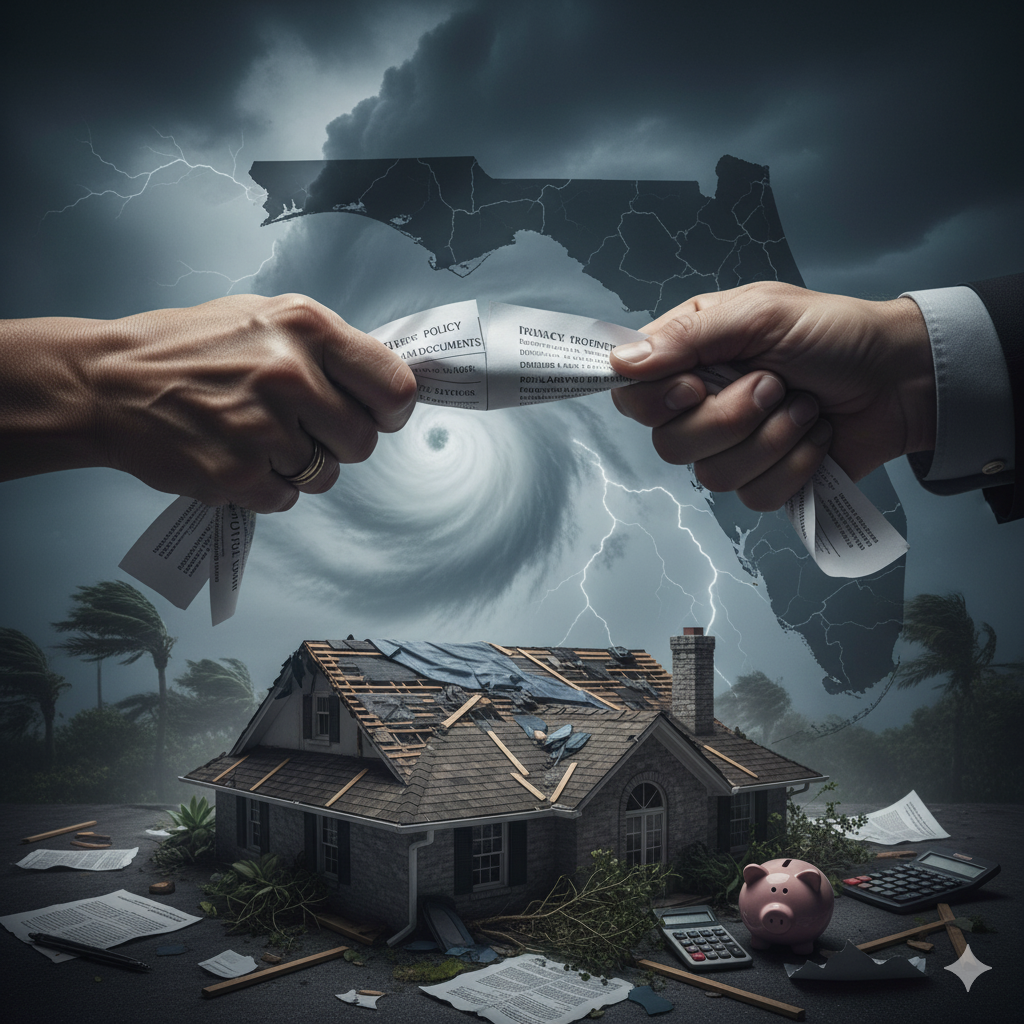
Signs Your Roof Insurance Claim Needs Help - And How to Get It
Roof damage can be stressful enough on its own. Then you have to file an insurance claim and hope your policy covers the repairs. Many Floridians assume their homeowners’ insurance will pay for everything when a storm hits, only to be surprised by exclusions, confusing paperwork, or low payouts. In some cases, people don’t even realize their roof claim is headed for trouble until it’s too late. This guide will help you spot the warning signs that your claim needs professional help and explain how to protect yourself from common pitfalls.
Why Roof Claims Get Complicated
Homeowners insurance is designed to protect against sudden, accidental events-things like windstorms, hail, or fallen trees. Those perils are unexpected, which is why we buy insurance. Normal aging and neglect, however, are not covered. According to ValuePenguin, homeowners insurance doesn’t pay for damage you could have addressed during normal ownership, and this includes negligence or normal wear and tear. Florida’s Office of Insurance Consumer Advocate also notes that if damage is caused by conditions such as wear and tear, rust or corrosion, coverage under a policy or endorsement will not apply. That means a claim might be denied if the adjuster believes your roof was already deteriorated before the storm.
Policies also contain provisions that determine how much you receive. The two main coverage types for roofs are Actual Cash Value (ACV) and Replacement Cost Value (RCV). ACV coverage pays what your roof is worth today after subtracting depreciation for age and wear. The National Association of Insurance Commissioners (NAIC) explains that ACV values are based on the cost to repair or replace the damaged property minus depreciation. Because roofs lose value as they age, ACV often does not provide enough money to fully repair or replace a roof. In contrast, RCV coverage pays the full amount needed to replace the roof using similar materials, without deducting for depreciation. The NAIC illustrates that an ACV policy might pay only a portion of the replacement cost, while an RCV policy pays the entire cost once repairs are completed.
Knowing which type of coverage you have is critical. A roof that originally cost $12,000 but is halfway through its lifespan might be worth only $6,000 under an ACV policy. The remaining $6,000 would come out of your pocket. Even with RCV coverage, insurers often send two checks-an initial payment based on the roof’s current value and a second payment for the recoverable depreciation after the repairs are complete. Understanding these terms up front can prevent unpleasant surprises later.
1. The Engineer Says “Wear and Tear”
Insurance companies sometimes hire engineers or building consultants to inspect damaged roofs. While these professionals are licensed, they are paid by the insurer, and their reports can strongly influence your claim. Because these consultants work for the insurance company, there is an inherent conflict of interest and homeowners sometimes worry that reports may minimize or deny damage. Engineers hired by insurers may focus on reasons to deny a claim-such as attributing damage to wear and tear-rather than accurately documenting storm‑related damage.
One common tactic is labeling the damage as wear and tear or poor maintenance. As mentioned earlier, wear and tear is an exclusion-insurers aren’t responsible for normal aging. An Investopedia article explains that wear‑and‑tear exclusions bar coverage for normal deterioration and that insurers may argue that damages resulted from lack of upkeep rather than a covered event. The same article notes that wear and tear is often subjective, and disagreements between insurers and policyholders are common. Another section warns that insurers may cite poor maintenance or faulty installation as reasons to deny payment. If an engineer’s report uses this language, it’s a clear sign your claim is at risk.
What to do
- Document evidence of storm damage. Before the engineer visits, take photos and videos of hail impacts, missing shingles, or tree damage. Fresh evidence helps counter claims that damage was pre‑existing.
- Invite your own roofer to the inspection. An experienced contractor can point out hidden damage and ensure the engineer doesn’t overlook critical issues. Their presence also provides a second set of eyes and an independent account of what they see.
- Seek a second opinion if needed. If the engineer’s report blames wear and tear, consult a public adjuster or independent engineer. Professionals who work for homeowners can provide alternative assessments and help dispute biased conclusions.
2. Your Settlement Only Covers Actual Cash Value
A low offer is one of the most obvious signs that your roof claim needs help. With ACV coverage, the insurer reimburses you for the roof’s depreciated value. That means older roofs receive less money. For example, a 15‑year‑old roof might be considered halfway through its life and valued at only half the cost to replace it. The NAIC notes that because depreciation can be substantial, ACV often falls short of the full replacement cost. Meanwhile, RCV coverage will eventually pay the full replacement cost, but only after you complete repairs and submit proof.
Even when you have RCV coverage, the first check is still based on the roof’s current value. The second payment-known as recoverable depreciation-reimburses you for the withheld depreciation once repairs are finished. This two‑step payment process can confuse homeowners and lead them to accept insufficient funds. If your contractor’s estimate is significantly higher than the insurer’s payment or the claim only covers a fraction of what you need, it’s a signal to push back.
Warning signs of a low offer
- Large depreciation deductions. If the estimate shows your roof is worth only a small fraction of the replacement cost, the insurer has applied heavy depreciation.
- Missing line items. Some insurance estimates omit necessary components like underlayment, flashing, vents, code upgrades, or disposal fees. These omissions reduce the ACV and the final payout.
- Unexplained differences with your contractor’s estimate. If your roofer’s quote for repairs or replacement is thousands of dollars higher than the insurance estimate, something is off.
What to do
- Review your policy to confirm whether you have ACV or RCV coverage. Policies can be confusing; if you’re unsure, ask your insurance agent for clarification.
- Compare estimates from your contractor and the insurance adjuster. Look for missing items or low pricing that doesn’t reflect current materials and labor costs.
- File a supplement. If your adjuster omitted items, your contractor can submit a supplement with photos, measurements, and code requirements to justify additional funds.
- Consult a public adjuster if the insurer insists on a low payout. Public adjusters represent policyholders and can negotiate for a higher settlement based on a detailed damage assessment.
3. You’re Confused About Recoverable Depreciation
Recoverable depreciation is the portion of your roof’s value that insurers hold back until you complete repairs. Many homeowners misunderstand this process and lose out on money. Investopedia explains that insurers generally issue two payments: the first based on the actual cash value to get repairs started and the second for the recoverable depreciation once you prove the repairs are complete. For example, if your roof costs $12,000 to replace and its actual cash value is $7,000, the insurer might send $7,000 upfront and release the remaining $5,000 after you complete the work and submit proof.
Investopedia explains that recoverable depreciation is the difference between the replacement cost and the actual cash value. To receive this second payment, policyholders must submit documentation-usually invoices and photos-showing that the repairs were completed. Without proof, the insurer has no obligation to release the withheld amount. The article also notes that policies with recoverable depreciation pay higher premiums but provide more complete coverage because they reimburse the depreciation. In short, failing to understand or follow the rules for recoverable depreciation can cost you thousands of dollars.
Signs of confusion
- Missing documentation. Homeowners might not realize they need to provide receipts and photos after work is done. Without them, insurers may refuse to release the depreciation.
- Misunderstanding the claim scope. Some homeowners or contractors change materials or leave off items to save money. However, recoverable depreciation is tied to completing the job according to the approved scope. Deviating can be considered a breach of the policy.
- Delays in repairs. Taking too long to complete repairs or waiting past the deadline may give insurers a reason to close the claim and deny the depreciation payment.
What to do
- Read your insurer’s instructions regarding recoverable depreciation. They will specify what proof is required and how long you have to provide it.
- Hire a reputable contractor who understands insurance claims and will follow the scope of work. Cutting corners can jeopardize your ability to collect recoverable depreciation.
- Submit proof of completion promptly. Keep copies of invoices, photos of finished work, and any permits or inspections. Send these to the insurer as soon as the job is done.
- Ask for help if the insurer refuses to release the depreciation despite your documentation. A public adjuster or attorney can advocate for you and ensure the insurer honors its obligations.
4. The Insurer Cites Policy Exclusions or Technicalities
Reading an insurance policy can feel like deciphering another language. Policies are full of exclusions and limitations that can drastically impact your payout. Some of the most common reasons insurers deny roof claims include:
- Wear and tear. As already discussed, insurers do not cover normal aging or gradual deterioration. ValuePenguin explains that homeowners insurance doesn’t pay for damage you could have addressed during normal ownership, including negligence or normal wear and tear. Florida’s Office of Insurance Consumer Advocate similarly notes that if damage is caused by conditions such as wear and tear, rust or corrosion, coverage will not apply. If the damage is attributed to wear and tear rather than a sudden event, the claim can be denied.
- Poor maintenance or faulty installation. Investopedia notes that insurers may cite poor maintenance or improper installation to avoid paying a claim. For example, if your roof was installed incorrectly or you failed to maintain it properly, the insurer may argue the damage is your fault.
- Pre‑existing damage. Insurers might claim the damage existed before the storm and is therefore not covered. Without documentation or proof of the roof’s condition before the event, it can be difficult to dispute this.
- Policy‑specific clauses. Some policies have higher deductibles for wind or hail events, or shorter timelines for filing claims. Others limit coverage for roofs over a certain age or materials.
What to do
- Read the policy carefully. Look for any exclusions or conditions that apply to roofs, such as wear-and-tear provisions, age restrictions, or code compliance requirements.
- Gather evidence. Provide maintenance records, inspection reports, and photos from before and after the storm to prove that the damage was sudden and not due to neglect.
- Request clarification in writing. If the insurer denies the claim due to an exclusion, ask them to cite the specific policy language and explain how it applies. This will help you understand your options.
- Get expert help. A public adjuster or attorney can interpret the policy, challenge improper denials, and negotiate a settlement. They understand the legal standards insurers must meet to enforce exclusions.
5. Your Adjuster’s Report Is Missing Key Costs
Another warning sign is when the insurance adjuster’s estimate omits critical items. Adjusters are busy and may not spend much time on each claim. They might overlook code upgrades, permits, flashing, ventilation systems, or underlayment. These omissions can reduce your settlement by thousands of dollars.
Additionally, Florida law has special requirements that impact roof claims. Under Florida’s 25% rule, the Florida Building Code specifies that if more than 25 percent of a roof area or roof section is repaired, replaced or recovered in any 12‑month period, the entire roof or section must be replaced to meet the current code. This rule applies if the roof was permitted before March 1, 2009 and more than 25% of the section is damaged; roofs permitted on or after March 1, 2009 are exempt because they already meet the newer code. Insurers sometimes overlook this requirement, leading them to pay for only partial repairs when full replacement is mandated. Understanding local code requirements can help you identify whether your adjuster’s estimate is adequate.
What to do
- Compare estimates. Obtain a detailed estimate from a reputable roofing contractor and compare it line by line with the insurance adjuster’s report. Look for missing materials, code upgrades, and labor costs.
- Document hidden damage. Take photos of damaged underlayment, creased shingles, bruised hail impacts, and any structural issues. Hidden damage is often the most expensive to repair and may not be obvious at first glance.
- File supplements. If the adjuster’s estimate is missing items, your contractor or public adjuster can file a supplement requesting additional funds. The supplement should include photos, measurements, and references to building codes like the 25% rule.
- Be aware of local laws. Know that Florida’s 25% rule may entitle you to a full roof replacement if damage exceeds a quarter of the roof. Use this rule to advocate for a complete payout when applicable.
6. Deadlines and Communication Issues
Timing is everything with insurance claims. Most policies require you to notify the insurer promptly after discovering damage. Some states have statutes of limitations for filing claims; general property claim deadlines may range from one to two years depending on your policy and jurisdiction. Failing to act quickly can jeopardize your claim because the longer you wait, the harder it is to prove that the damage resulted from a recent storm rather than long‑term neglect. On the other side, insurers must meet their own deadlines. In Florida, the Homeowner Claims Bill of Rights requires insurers to acknowledge receipt of a claim within seven days, provide confirmation of coverage and an initial payment within 30 days after receiving a completed proof‑of‑loss statement, and pay or deny the claim within 60 days of the claim filing. These deadlines demonstrate that both sides have obligations.
Delays in communication can also stall your claim. Missing an email from your adjuster or failing to return phone calls can lead to misunderstandings and missed opportunities to provide information. Similarly, if you don’t follow up, your claim might languish in a pile on someone’s desk. Keeping organized and proactive helps ensure your claim stays on track.
What to do
- File your claim promptly. Notify your insurer as soon as you discover the damage. Provide as much information as possible-photos, notes, and a timeline of events.
- Keep a communication log. Write down the date, time, and details of each conversation with the insurer or adjuster. Save emails and letters in a dedicated file.
- Follow up regularly. Politely check on your claim’s status if you haven’t heard back within the timeframes promised by your insurer. Persistence shows you’re paying attention and expect a timely response.
- Watch for deadlines. Make sure you meet any deadlines for submitting documentation, receipts for recoverable depreciation, or requests for supplements. If you’re unsure about a deadline, ask your adjuster or consult a professional.
7. You’re Unsure What Your Policy Covers
Many homeowners buy insurance without fully understanding the details. Terms like ACV, RCV, deductibles, and depreciation can be confusing, but they have a huge impact on your claim. As mentioned earlier, the NAIC explains that ACV policies pay the depreciated value of your roof, while RCV policies pay the full replacement cost. If you don’t know which you have, you may assume you’ll receive more than what your policy actually provides. Likewise, some policies have separate deductibles for wind or hurricane damage that can be a percentage of your home’s insured value.
Policy exclusions are equally important. Wear-and-tear provisions, age limitations, and maintenance requirements can limit your coverage. Reading and understanding these clauses before filing a claim can help you avoid surprises.
What to do
- Read your policy in full. It might be dense, but take the time to understand the coverage type, deductible, exclusions, and conditions. Highlight sections about roofs and storm damage.
- Ask questions. If something is unclear, contact your insurance agent or an independent professional. They can explain terms in plain language.
- Prepare for out‑of‑pocket costs. Budget for deductibles, depreciation, and potential upgrades that your policy might not cover. Knowing your financial responsibility ahead of time will reduce stress if you need to file a claim.
8. You Feel Overwhelmed or Mistreated
A roof claim can be emotionally exhausting. After a storm, you’re dealing with repairs, paperwork, and possibly a damaged home. If you feel pressured by contractors or insurance representatives, or if the process becomes overwhelming, it may be time to bring in reinforcements.
Some contractors may offer to “waive your deductible” or promise that you can pocket the recoverable depreciation. These offers can be forms of insurance fraud, which may result in legal trouble for both you and the contractor. Likewise, if an insurance adjuster rushes you to sign documents or accept a low settlement, you should pause. Taking time to review everything carefully and consult a professional can protect you from making costly mistakes.
What to do
- Choose reputable contractors. Look for licensed, insured roofers with good reviews. Avoid anyone who suggests unethical practices like covering deductibles or inflating invoices.
- Consider a public adjuster. These professionals represent you, not the insurer. They handle communication, estimate damages, and negotiate for a fair settlement. Their fee is usually a percentage of the additional amount they recover for you.
- Take care of yourself. Dealing with a damaged home is stressful. Ask friends or family for support, and don’t hesitate to seek professional help if the emotional burden becomes too much.
When to Call a Public Adjuster
Seeing one or two of these warning signs doesn’t guarantee that your claim will be mishandled. However, if you encounter multiple issues-such as a biased engineer’s report blaming wear and tear, a low ACV offer, confusion about recoverable depreciation, and missing line items-it’s wise to involve a public adjuster. Public adjusters are licensed by the state and work exclusively for policyholders. They understand insurance policies, calculate realistic repair costs, gather evidence, and negotiate with insurers. Because they are paid a percentage of the additional settlement they secure, it’s in their interest to maximize your claim.
In Florida, public adjusters can also help navigate state‑specific rules like the 25% roof replacement law. They know how to document damage, apply code requirements, and file supplements to ensure you receive the full amount owed under your policy. Engaging a public adjuster early can prevent mistakes, avoid missed deadlines, and relieve you of the burden of dealing with the insurance company yourself. For homeowners looking for professional guidance, consider reaching out to NeJame Claims Adjusting, a licensed public adjusting firm that can review your claim and help ensure you receive the benefits you’re entitled to.
Conclusion: Take Control of Your Roof Claim
Dealing with a damaged roof isn’t just about patching shingles-it’s about protecting your biggest investment and ensuring you’re not left paying for repairs that should be covered by insurance. By learning the warning signs of a struggling claim-engineers labeling damage as wear and tear, low ACV payouts, confusion over recoverable depreciation, policy exclusions, missing estimate items, communication delays, unclear policies, and general overwhelm-you empower yourself to take action.
Remember that wear‑and‑tear exclusions mean normal deterioration isn’t covered-ValuePenguin notes that homeowners insurance doesn’t pay for damage you could have addressed during normal ownership, and Florida’s Office of Insurance Consumer Advocate points out that damage caused by wear and tear, rust or corrosion is not covered. ACV and RCV policies pay very different amounts, and recoverable depreciation requires documentation and patience. Local codes like Florida’s 25% rule can entitle you to a full roof replacement. Deadlines matter, communication matters, and having the right people on your side matters.
Don’t let confusing language or pushy representatives determine your outcome. Document everything, understand your policy, work with trusted professionals, and seek help when needed. With the right support and knowledge, you can weather the storm of insurance claims, restore your home, and move forward with confidence.
Call Orange Contracting and Roofing today at (407) 205-2676, visit myorangecontracting.com or email [email protected] to schedule a free roof inspection. Don’t wait for a big storm to find gaps in your coverage or problems on your roof. Stay protected — get Orange to check your roof and help you understand your insurance now.
The company’s office is located at 105 Candace Dr., Suite 129, Maitland, FL 32751. Taking this step can help ensure a home is well-prepared to face the demands of the Central Florida climate for years to come.